August 29, 2013
Lodge 271, Providing 75 Years of Service
This Labour Day weekend, Lodge 271 celebrates its 75th anniversary of continuous service to its members. This Lodge has the distinction for being the first construction lodge chartered by the International Brotherhood of Boilermakers Canada.
The Boilermaker trade had been well established in Quebec long before 1937. There had been many other Boilermaker lodges in the province throughout the years; some lasted for a long time and others not so long, depending on the employment situation for the members.
[Click to Enlarge]
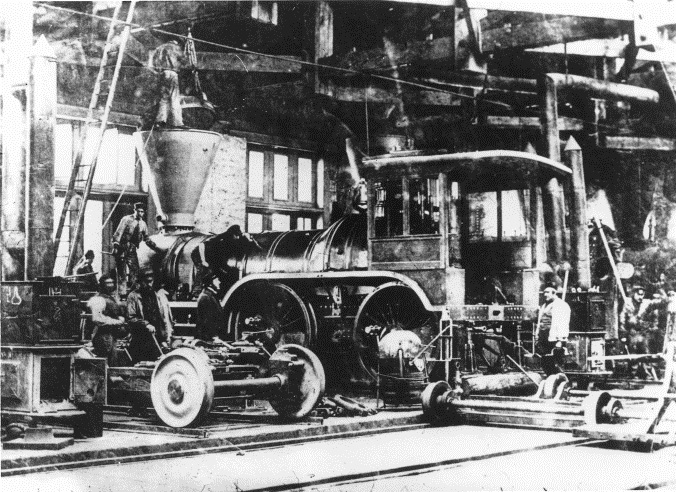
It was Quebec Boilermakers who built the third successful steam boat in the world in 1809 for John Molson. The first steam train built in Quebec was in 1853, the first wood grinder pulp mill in North America went in production at Valleyfield in 1866, and the first chemical wood-pulp mill in Canada came on steam at Windsor Mills in 1869, all using the skills of the Boilermaker to get the job done.
The first record of Boilermakers organizing in Quebec was in 1893 - lodge 134, representing Boilermakers in the railway and fabrication shops. There were eight other local lodges granted charters by the International in Quebec over time, all of them lapsed due to the closure of the shipyards and shops.
On October 15, 1937, Lodge 271 was granted a charter for construction work. Her jurisdiction covered Quebec, New Brunswick, Nova Scotia, Prince Edward Island, and Newfoundland and Labrador. The first employers to agree to construction agreements in Quebec were Toronto Iron Works, Babcock-Wilcox & Goldie-McCulloch, and Foster Wheeler. Horton Steel was erecting tanks in Nova Scotia and New Brunswick at that time and these agreements were verbal only.
During the 1940's, Lodge 271 members were busy erecting boilers in hotels, institutions, manufacturing plants and in defense industries, along with some tank work. After the Second World War, Boilermakers were concentrated in the east end of Montreal with expansion of oil refineries and new a chemical plant.
In 1957, Lodge 271 became part of the national agreement recognizing the lodge's geographic jurisdiction. At this time, many 271 members took advantage of the Boilermaker's travel card system and went to work in British Columbia at the Kitimat-Kemano Aluminum and Power Plant project. The end of the decade and start of the 1960's saw more opportunities for Boilermakers in the province with construction of hydro work, nuclear plants, chemical plants, refinery, pulp & paper mills and garbage incinerators.
In 1960, the wage rate for a construction Boilermaker was $2.95 per hour and by the end of the decade was $4.55 per hour. Once the 1960's came to an end, legislation prevented Loge 271 from further participation in national agreements in Quebec, but Lodge 271 was still involved in these agreements because of her jurisdiction in the Maritime provinces and Newfoundland.
In 1969, Lodge 203 received its charter in Newfoundland and Labrador. In 1973, Lodge 73 was created in New Brunswick, Nova Scotia and Prince Edward Island, leaving Lodge 271 jurisdiction in the province of Quebec. In the 1970's the Boilermakers were busy at the Iron Ore Company at their plants in Mont Wright and Sept-Îles, Cartier Mining Company where a new boiler was installed, and in Quebec City where an incinerator was constructed. There was hydro work at James Bay with 16 generators and a hydro-electric station in Baie Comeau. Sidbec-Dosco Ltd. expanded, building two electric furnaces and a reduction plant. There was work at the pulp mills and tank farm at Limoilou. There was refinery maintenance for members in permanent work and turnarounds. In 1972, the Boilermakers wage rate was $5.73 and by 1980 was $13.15.
The 1970's & 80's opened up opportunities for 271 members to travel card. There was work in the Oil Sands of Alberta and the Pulp Mills in British Columbia.
In the 1980's there was a slow-down in industrial-type new construction, but there was some work: a Hydrogen Peroxide plant, a major upgrading by Shell, an Air Separation Plant for Union Carbide Ltd., a natural gas fractionating plant and a major upgrading project at the Ultramar refinery. Pulp & paper mills upgraded some of the plants in the province. There was even some hydro work that was taking place. In 1985, the hourly rate hit $21.67.
The work picture for construction Boilermakers in Quebec slowed down in the 1990's. There was a lack of travel card work because the rest of the country was suffering through slow economies also.
We commend the members of Lodge 271 for their commitment to the Boilermaker trade, and to the lodge for her service to the members for 75 years.